Practical Motorcycling Tips (Q-Ride): Ride Safe and Confident
Starting your journey on two wheels is exciting. Whether you’re new to riding, returning after a break, or preparing for your Q-Ride Licence, mastering the basics early will set you up for success. I’ve gathered practical motorcycling tips to help you start to build confidence, stay safe, and enjoy every ride.
Essential Motorcycling Tips Riders Should Know
Riding comes with unique challenges - from long stretches of open road to unpredictable weather and diverse traffic conditions. Here are some key tips to keep in mind:
Wear the right gear: Always invest in a good helmet, gloves, jacket, pants, and boots designed for motorcycling. Protective gear is your first line of defence. MotoCap is an independent gear testing company backed by the government and universities. What will surprise you is that cheaper gear can be more protective than the expensive branded gear.
Check your bike before every ride: Inspect tyres, brakes, lights, and fluid levels. A quick pre-ride check can prevent breakdowns and accidents. Your tyre pressures will always go down; if nothing else, check this, then lights/indicators, and finally fluids, but of course, check them all.
Practice smooth control: Work on coordinating the throttle, clutch, and brake. Smooth inputs help maintain balance and control, especially at low speeds. If you feel the bike jerking around, e.g. when you use the front brake, and it lunges forward, think about slowing down your braking. Try counting 1, 2, 3, 4 while squeezing the front brake. In Q-Ride, we are taught to set up (take the free play out) and squeeze (count 1, 2, 3, 4).
Stay visible: Use reflective gear and keep your headlights on, even during the day. Position yourself where other drivers can see you clearly. When you see a car in the distance (oncoming, merging), move away from it. The driver may be on "autopilot",, but they might sense the movement.
Ride within your limits: Don’t push beyond your skill level. Gradually increase your riding challenges as you gain experience. Watch the group rides, you tend to get "pulled" along. Aim to be empowered (less ego) and say "I see you at the cafe" ... ride your own ride.
These tips form the foundation of safe riding. They help you avoid common mistakes and build habits that protect you on the road.

Looking for coffee
Quick Tip to Prepare for Your Q-Ride Licence
Preparing for your Q-Ride Licence can feel overwhelming, but breaking it down into manageable steps makes it easier. Here’s how to get ready:
Understand the test requirements: Familiarise yourself with the Q-Ride practical test format and criteria. Knowing what to expect reduces anxiety, so read the Motorcycle Riders Guide from TMR. It covers many of the Q-Ride techniques.
Take professional training: Enrol in a Q-Ride-based coaching course that covers both theory and practical skills. Trainers provide valuable feedback and tips. There are two different types of qualified motorcycle trainers (ones that have been certified to teach Q-Ride and ones that haven't).
Practice regularly: Spend time riding in different conditions - quiet streets, busy roads, and varying weather. This builds adaptability. You have at least 3 months on your RELs; use them wisely and productively. I have had students turn up who have hardly ridden (or not at all) during their Ls period, and you can tell some manage to get through while others don't (the reality is that having more riding experience tends to help you stay safe on the road).
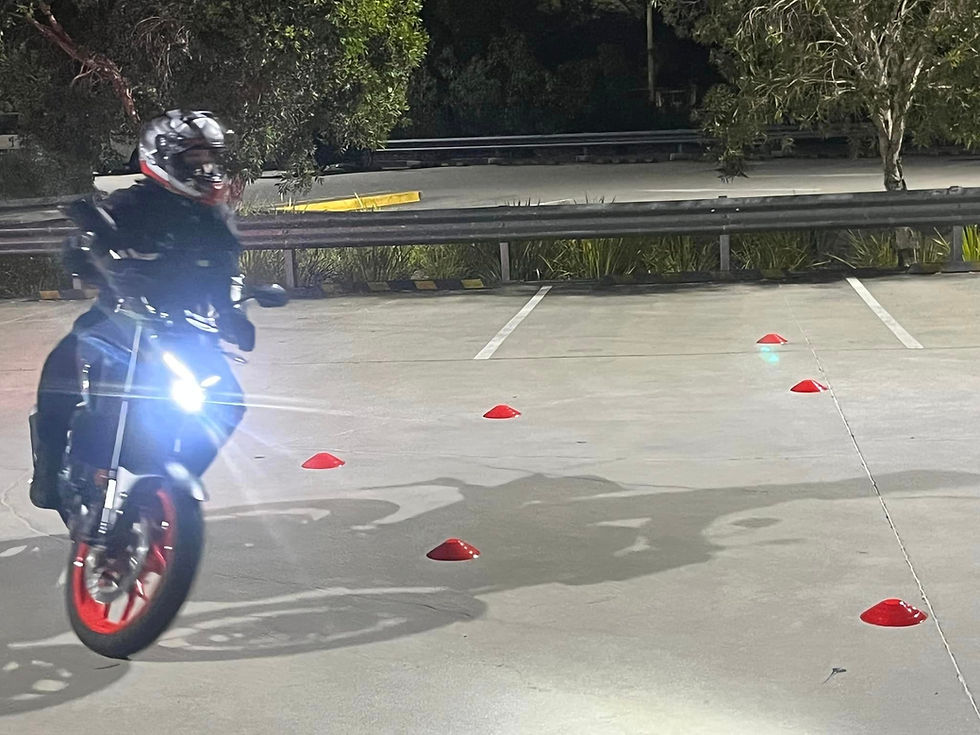
Master slow-speed maneuvers: Tight turns, U-turns, slow straight and fig 8s are common in the test. Practice these until you feel confident. Note: Slow speed is where new (and old) riders will likely drop their bike, be aware!
Learn early hazard perception: Develop the habit of scanning the road ahead (12 secs), checking mirrors, and anticipating other road users’ actions.
By following these steps, you’ll approach your Q-Ride test with confidence and a solid skill set.
Riding Safely in Australian Conditions
Australia’s roads can be challenging. From hot sun to sudden rain, and wildlife crossings to gravel patches, you need to be prepared.
Adjust your speed: Slow down in wet or slippery conditions. Gravel and dirt roads require extra caution.
Watch for wildlife: Dawn and dusk are peak times for animals on the road. Stay alert and be ready to brake.
Stay hydrated and rested: Long rides in the heat can cause fatigue. Take breaks, drink water, and avoid riding when tired.
Use your horn and signals: Communicate clearly with other road users. Don’t assume they see you.
Ride defensively: Expect the unexpected. Keep a safe distance (6 secs of road vision and 3 secs of crash avoidance) and be ready to react to sudden hazards.

Clear Mountain - Brisbane, Australia
Building Confidence as a New or Returning Rider
Confidence comes with practice and preparation. Here’s how to build it steadily:
Start small: Begin with short rides in familiar areas. Gradually increase distance and complexity.
Set achievable goals: Focus on mastering one skill at a time, like smooth braking or lane positioning.
Join a riding group or community: Sharing experiences and tips with others can boost your motivation.
Review your rides: Reflect on what went well and what could improve. Learning from each ride accelerates progress.
Stay positive: Mistakes happen. Use them as learning opportunities rather than setbacks.
Remember, confidence is a journey, not a destination. With consistent effort, you’ll feel more comfortable and in control.
Keep Improving and Enjoy the Ride
Riding is a skill you develop over time. Keep practising, stay curious, and never stop learning. Each ride is an opportunity to improve and enjoy the freedom that motorcycling brings.
Attend refresher courses if you’ve been off the bike for a while.
Explore new routes to challenge yourself and keep riding exciting.
Maintain your bike regularly to ensure it’s always ready.
Respect the road and other users to create a safer environment for everyone.
By embracing these habits, you’ll not only pass your Q-Ride Licence but also become a confident, responsible rider who enjoys every kilometre.
Riding is a rewarding experience when you’re prepared and informed. Try these motorcycling tips to build your skills and confidence. Remember, every expert was once a beginner. Keep riding safely and enjoy the journey ahead!

Comments